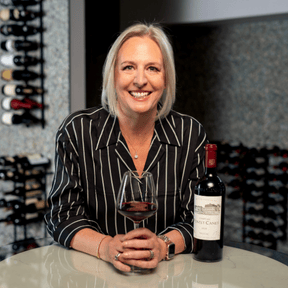
Welcome to Mindful January on Food Wine and Flavor, where we’re transforming the art of wine tasting with a focus on the essential Five S’s of Tasting Wine. In this post, we break down a step-by-step process—Sight, Sniff, Swirl, Sip, and Savor—to help you unlock the full spectrum of aromas, flavors, and textures in every glass. Whether you’re new to wine tasting or looking to refine your ritual, our guide offers practical tips to create a truly mindful experience, making each sip a celebration of both flavor and intention. Dive in and discover how mastering the Five S’s can elevate your wine journey this Mindful January! Nothing wrong with Dry January – but give Mindful January a serious look!
Â
Â
Â
So today we’re going to talk about the five S’s of tasting. If you go to the links in the notes, I do have a longer video that goes through step by step in a much more detailed way. But for the purposes of this video, I’m just going to do a quick review of the five steps:
Â
Five Steps of Wine Tasting
Sight
Sniff
Swirl
Sip
Savor
Those are the five steps to tasting.
And I introduce this at the beginning of all of my wine classes because it’s important, I think, for people to understand how to really take in all of the aromas, the flavors, the mouthfeel, the taste sensation, all of the things that are involved in tasting wine. So we’re going to do kind of a mini session on that here today. We want to focus on being truly present with each step.
Â
So I’m going to highlight how each sense contributes to the overall wine experience.
Â
Sight
First is sight.
Â
So you’re going to, when you’ve got your wine in your glass, you’re going to look at your wine and you’re going to hold your glass at a 45 degree angle. And the best thing is if you have a white piece of paper, maybe a white napkin, or if you’re perhaps in a restaurant, the back of a menu. If you’ve got your white piece of paper and you’ve got your glass at a 45 degree angle, you get a really good sense for the color, the clarity. Are there any bubbles in the wine? Are the legs or the liquid sticking to the sides of the glass. Once you’ve turned your wine glass 45 degrees and then turn it straight back up, the wine that’s running down the wine glass, is it running quickly or is it running slowly? Those are the legs.
Â
Sniff
Second step is to sniff. And this is where I tell people, do not swirl your wine glass yet. You want to sniff. You want to see what the native wine, what the natural wine offers in terms of aromas.
Â
So I will start with the wine glass, the top of the wine glass at my collarbone. If I can smell the wine from there, it’s definitely a powerful aromatic wine. If I can smell it from my chin, it’s somewhere in the middle, probably somewhat of an aromatic wine. But if it takes all the way to underneath my nose, that is not gonna be an aromatic wine. So now that we’ve assessed it without swirling, step number three is to go ahead and swirl the wine.
Â
Swirl
Now, why do we swirl then? Well, because when you swirl the wine, the oxygen starts to evaporate and as it goes up through the glass, it lifts up the phenolics, which are those things that we smell and take in as aromatics. So that allows us to sense before we even taste what the wine is all about. And then step number four is to take a sip.
Â
Sip
Now if you’ve not had any wine yet when you go to have this little tasting, do kind of throw away taste. Do a taste, kind of bathe the inside of your mouth with the wine. Get rid of any other remnants of anything else that you ate or drank earlier in the day or maybe the day before. Just toothpaste, whatever. Go ahead and take that first sip. Okay, so once you kind of coated your mouth with the wine, then go ahead and take a second sip. That is when you’re going to want to really look at the five characteristics of wine. And if you aren’t sure what I’m talking about there, I’ve already done a segment on that, and so I will have a link for that in the show notes as well. But be very mindful, take a moment, breathe. Don’t rush through the sip and the savor part. And savor, by the way, is step number five.
Â
Savor
So you take your sip and then savor is when you determine the body of the wine. Do the flavors linger? Does it last for a while? Or is it just quick and refreshing and then dissipates and goes away? Those are the kinds of things that you want to notice with the 5Ss. So when you drink your wine, I really urge you not to just, you know, throw it back, but to really savor it. And maybe you only go through the first five steps really slowly the first time. If you’re with friends or if you’re having a meal, but you do want to really recognize and enjoy that so that as you do take subsequent sips of your wine throughout your meal, throughout your conversation, your brain knows that those things are there. So they’re going to be looking for that.
Â
Elevate Your Experience
It’s going to elevate your experience with each and every sip all the way through. If you are on your own, if you’re enjoying a glass of wine with a good book, or you’re just kind of relaxing at the end of your day, then maybe you do that two or three times to just enjoy it maybe at the beginning of the glass midway through and then more toward the end, just to kind of re-experience it and see if there’s anything new that you taste or anything new that you experience that you didn’t the first time through. That’s also a common thing.
Tasting Notes
I would also maybe urge you to jot down a few notes because that will help you remember it, even if you only remember it for that sitting.but it will kind of register that into your consciousness of that’s what you’re experiencing. And that’s actually gonna be useful to you as you go through your wine journey and continue to learn more. I hope you’ll join the conversation by sharing your mindful wine moments and personal takeaways on social media. You can use the designated hashtag #mindful with wine on our Expand Your Palate Facebook page.
Â
While you’re there, download the FREE 5 S’s of Tasting Guide, a printable to help remind you to think through and savour every bit of the wine you’re enjoying.
Â
Thank you so much for joining me for Mindful January, a series that’s meant to promote a gentle, inspiring way to start the new year with intentionality and appreciation for the artistry of wine. Please like, follow, and share. Cheers!
When it comes to wine, France is often the first country that comes to mind. French wine regions have a long history of wine production and is home to some of the world’s most famous wines. From Champagne in the north to Bordeaux in the southwest, dozens of regions and subregions produce wines with distinct flavors and characteristics. In this article, we’ll explore some of the key French wine regions, including their history, geography, and climate, and the grape varieties that are most commonly grown there.
Wine History of France
France has a rich history of wine production spanning thousands of years. The Celts settled in the region around 1200 BC, and the ancient Greek community of Phoeceans introduced grapevines near modern-day Marseilles around 600 BC.
Once trade was well-established and lucrative, threats came from the Carthaginian tribes of North Africa and the Etruscans of Italy. The Greeks appealed to the Romans for protection and Rome sent her soldiers.
This first settlement outside of Rome was called “Nostra Provincia”, which is the modern-day French wine region, Provence.
Why were the Romans so invincible at the time? Wine.
Romans built roadways and added red wine to their water as an anti-microbial. Water around the beginning of the Modern Era was not safe to drink. Most people at that time did not travel more than ten miles from their homes during their lifetimes due to safety concerns. Roman soldiers could travel vast distances and manage large areas as they had solutions to this problem.
Romans prioritized expanding vineyards across the country wherever they traveled to keep a steady supply of health-giving grapes. Burgundy, Bordeaux, South-West France, and the Loire had established vineyards by the 1st century. Alsace followed soon after, and Champagne was under the vine by the 5th century.
In the fifth century, there were supply chain issues and cataclysmic weather events. The Roman Empire had overexpanded, and it finally fell, albeit slowly, initiating the Dark Ages.
After Rome’s fall, the Church and nobility gradually played key roles in cultivating French wine culture during the Middle Ages. Monasteries became major wine production centers, and the nobility established their vineyards. The wine was needed for Mass.
Monks were often some of the most educated people of the time and they could focus on working the vineyards and recording which varietals and methods fared best in which sites. This is the foundation of what makes French wines the gold standard by which all other wines strive and measure themselves. The French were the first to analyze, record, and perfect their wine-making processes,
It was about this same time that Clovis united a federation of Germanic tribes and conquered Gaul (the name for France by the Romans). He brokered a deal with Bishop Remi of Reims to bless a cask of wine. It is said that Clovis vowed to not let the cask run dry to defeat his enemies. In trade, he would be baptized at Reims and agreed to unite France under Catholicism and the Pope. He named his kingdom Francia (pronounced FRANK – ee – ahh)
Charlemagne assumed the throne in the 8th century. He conquered large portions of Germany and Italy for the kingdom. Pope Leo III rewarded his religious fervor by crowning Charlemagne Holy Roman Emperor.
Cologne, Germany – April 21, 2010: Stained Glass (1865) in the Dom of Cologne, Germany, depicting Charlemagne, Holy Roman Emperor
Eventually, Charlemagne’s kingdom was divided among three of his grandsons. This division of Frankish, German, and territories in between led to future wars all across Europe. Next came the threats of the Norsemen…
In 911, Charles III gave the Northwestern portion of France to the Norsemen in hopes of keeping peace. Eventually, this name was truncated to Norman and then Normandy.
William the Conqueror, Duke of Normandy, invaded England in 1066 and claimed the English throne. This is important because his great-grandson held the titles of Duke of Normandy, Count of Anjou, and Maine as well as being in line for the throne of England.
Once Henry (Plantagenet) married Eleanor of Aquitaine, this power couple controlled nearly all of western France. This became tenuous a few years later when Henry ascended the throne of England to become King Henry II. (For those of you Robin Hood movie fans, this would be the father of King Richard – aka Sean Connery)
On November 1st, 1179, King Phillip was crowned King of France, the first of this new realm.
Cathar country (France). Road to Maury, located northwest of Perpignan, is a wine town. The landscape is unique: a long corridor of vineyards, protected to the north by the Corbières chain, dominated by castles and the foothills of the Pyrenees.
Occitania, bordering the Mediterranean, used the language of Lange https://www.britannica.com/topic/Catharid’Oc. This was the language of troubadours and poets. Pope Innocent III waged a war against the Cathar sect of Christianity in 1209. Bloodied and broken, this final area (and now the French wine region) was annexed to France.
In 1309, the papacy was moved from Rome to Avignon. A total of seven popes reigned at Avignon. John XXII built himself a summer palace called Chateauneuf-du-Pape.
Vineyards at Chateauneuf du Pape, Provence, France
At this time, the English King was technically a vassal of France due to all of his land holdings (see Henry Plantagenet above). When he refused, the Hundred Years War was initiated (1337 – 1453). At the same time, French King Charles VI disowned his son, King Charles VII.
What a mess.
Joan of Arc enters the picture and rides to Chinon (note: there’s a wonderful red wine from this same area in The Loire) to meet with Charles VII. Her sole purpose was to convince him to retake the throne and expel the English from France – which is exactly what he did. By the way, the Duke of Burgundy turned Joan in to be executed for her braveness.
Chaos, poverty, and plagues were now running rampant. The Bubonic Plague arrived on the shores of Marseilles, killing 30-50% of all the people where it landed.
Burgundy was so short of workers to tend the vineyards that most of the Pinot Noir was left to Gamay from neglect. Burgundy and most other Northeastern duchies were defeated by 1477. France was consolidated to principally what we know of it today.
At this time, the Renaissance and French wine regions blossomed. Palatial estates were built in The Loire. French nobles were converting to philosophies such as those of Martin Luther and John Calvin. Why? Because questioning the pope undermined the crown and weakened the royals. This strengthened the positions of nobility.
In the 17th century, the Dutch drained the swamp of Bordeaux and the Canal du Midi created transportation from Toulouse to the Mediterranean. The Royal Court was moved to Versailles – with nearly 5,000 inhabitants. All things new and novel were valued there…and Champagne was their crowning glory!
By the 1700s, the wine trade flourished as wealthy merchants invested in vineyards, making wine a significant export. But while the rich and powerful dined like kings, the rest of France was broken and destitute, unable to fight off illness and malnutrition. The French Revolution began in France in 1789. The more secular areas like Bordeaux remained untouched, but wine regions with a heavy religious influence, like Burgundy, were decimated.
Napoleon went on to name himself emperor and waged war against England, Russia, and Austria. He was eventually defeated but implemented the Napoleonic Code of Inheritance, mandating that all holdings be equally divided among every child (male or female) in the family. We will see this clear impact in Burgundy vs. Bordeaux today.
In 1842, France constructed a national train system, allowing for wines to be transported throughout the country for sale. As we’ll see in Bordeaux, there were laws instituted to protect certain regions and their market dominance.
The Expedition of Universelle was held in Paris, establishing the most important houses of Bordeaux as well as the pricing scheme that generally holds today. Phylloxera devastated the vineyards beginning in 1863.
The Champagne wine region was especially hit hard during WWI and WWII. The push to create national wine laws is meant to protect the “signature” of a place – in other words, the importance of terroir.
Today, France is a global leader in wine production, known for high-quality and complex wines. And the evolution is not over… There are emerging French wine regions, such as Savoie, Jura, and the South-West that are bringing us indigenous grapes and new styles we have yet to try.
What is important to understand is that France is the model that other winemakers strive for. Although many other wines and clones have been developed, we still clamor for French wines. If you are truly interested in wine, I recommend at least familiarizing yourself with the evolution and importance of France and French wines in the history of wine.
Why France Is the Foundation of Wine Education
France isn’t just a wine-producing country; it’s the template. For centuries, French winemakers have perfected the art of matching specific grape varieties to specific terroirs—the unique combination of soil, climate, and geography that gives wine its character.
Here’s why we study France:
Terroir Philosophy: The French concept of terroir—that wine is a reflection of its place—has influenced winemaking worldwide. This idea that soil, climate, and tradition matter as much as the grape itself became the foundation for quality wine production everywhere.
Classification Systems: France developed the appellation system (AOC/AOP), which became the model for quality wine designations globally. From Italy’s DOC to Spain’s DO to America’s AVA system, they all trace back to the French model.
Grape Variety Benchmarks: French regions established the benchmark styles for major grape varieties—Burgundy for Pinot Noir and Chardonnay, Bordeaux for Cabernet Sauvignon and Merlot, Champagne for sparkling wine. When winemakers anywhere in the world plant these grapes, they reference the French standard.
Located in southwestern France along the Gironde estuary, Bordeaux is arguably the world’s most famous wine region. It’s home to some of the most prestigious and expensive wines on the planet, but it’s also a region that produces accessible, everyday wines that punch well above their price point.
What makes Bordeaux special? It’s the birthplace of the Bordeaux blend—that artful combination of Cabernet Sauvignon, Merlot, Cabernet Franc, and sometimes Petit Verdot and Malbec that creates wines of remarkable complexity, structure, and aging potential.
The Geography of Greatness
Bordeaux is divided by the Gironde estuary and its tributaries into distinct areas, each with its own personality:
Right Bank (Pomerol, Saint-Émilion): Merlot-focused wines grown in clay and limestone soils, producing wines that are often more approachable when young, intensely aromatic, and velvety in texture. Pomerol and Saint-Émilion produce some of the world’s most sought-after wines.
One of the most important lessons Bordeaux teaches us is the art of blending. Unlike Burgundy, where single-variety wines reign supreme, Bordeaux is all about the blend. Each grape variety brings something unique to the final wine:
Cabernet Sauvignon: Structure, tannins, aging potential, cassis and cedar notes. This is the backbone of Left Bank wines, providing the framework that allows these wines to age for decades.
Merlot: Softness, fruit-forward character, approachability, plum and chocolate flavors. Merlot fills in the gaps left by Cabernet’s structure, adding flesh and approachability.
Cabernet Franc: Aromatics, elegance, herbal notes, violet and red fruit. This grape adds perfume and complexity, particularly important in Right Bank blends.
Petit Verdot & Malbec: Color, tannin, spice (used in smaller amounts). These supporting players add depth and complexity, though they’re used sparingly—often just 3-5% of the final blend.
This philosophy of blending for balance has been adopted by winemakers around the world, from Napa Valley to Australia to South America. When you see “Bordeaux blend” or “Meritage” on a bottle from anywhere in the world, you’re seeing Bordeaux’s influence.
Why This Matters for Your Wine Journey
Understanding Bordeaux gives you a framework for understanding wine everywhere. When you taste a Cabernet Sauvignon from California, you can reference the Bordeaux style. When you encounter a Merlot-dominant blend from Washington State, you have the Right Bank to compare it to. When you see terms like “Left Bank style” or “Right Bank character,” you’ll know exactly what winemakers mean.
France, and Bordeaux specifically, teaches us that great wine is about more than just the grape—it’s about place, tradition, and the thoughtful combination of elements to create something greater than the sum of its parts. Bordeaux isn’t complicated—it’s complex. And that complexity is what makes it endlessly fascinating.
Start Your Bordeaux Exploration
Ready to experience Bordeaux for yourself? Here are some accessible entry points at different price tiers:
France is the gold standard of wine not because it’s elitist or exclusive, but because it laid the foundation for quality winemaking worldwide. Bordeaux, with its commitment to terroir, its art of blending, and its centuries of refinement, exemplifies this standard perfectly.
This week, I encourage you to slow down with a glass of Bordeaux. Notice the layers, the structure, the way the wine evolves in your glass. You’re not just tasting wine—you’re experiencing centuries of tradition and the philosophy that great wine is a reflection of place, care, and balance.
What’s Next: Over the next two weeks, we’re diving even deeper into Bordeaux—next week we’ll explore the Left Bank in detail (Cabernet country), and the following week we’ll discover the Right Bank (Merlot magic). By the end of January, Bordeaux won’t feel complicated anymore. It’ll feel like an old friend.
Want to Master Wine Fundamentals?
This overview of why Bordeaux matters is just the beginning. If you want to develop true wine confidence—from advanced tasting skills to understanding cool vs. warm climates to ordering at restaurants without hesitation—Wine PhD: Essentials covers it all in structured, easy-to-follow modules.
There’s something magical about New Year’s Eve that goes beyond just the countdown to midnight. For our family, it’s doubly special because my youngest daughter was born on December 31st. Now 23 and living on her own, she celebrates with friends these days, but when she comes home for the holidays, I get to spoil her with a homemade pink champagne birthday cake—and this year’s Champagne & Berries Cake was a showstopper.
If you’re like most people, you probably find yourself with leftover champagne or sparkling wine after New Year’s celebrations. Maybe the bottle went flat, or there’s just a cup or two lingering in the fridge. Before you pour it down the drain, let me introduce you to the most delightful way to give that bubbly a second act: baking it into a gorgeous, celebratory cake.
Why This Cake is a Winner
This isn’t just any cake. The champagne adds a subtle, sophisticated flavor that makes every bite feel like a celebration. The berry medley brings beautiful pops of color and fresh, bright flavor that cuts through the richness of the buttercream. And that champagne reduction in both the cake and frosting? It concentrates all those lovely notes into something truly special.
What I love most is that flat champagne works perfectly—in fact, you want it flat for baking! So if you opened a bottle for toasting at midnight and there’s some left the next day, you’ve got the perfect excuse to make this cake.
The Beauty of the Champagne Syrup
One of the secret weapons in this recipe is the champagne syrup that you brush over the warm cake. This technique keeps the cake incredibly moist while adding an extra layer of that lovely champagne flavor. The lemon juice brightens everything up and keeps it from being too sweet.
Pro tip: Don’t skip the step of poking holes in the cake before brushing on the syrup. Those little channels let the syrup soak deep into the cake, ensuring every bite is perfectly flavored.
That Blush Pink Frosting
The champagne buttercream is where this cake really shines. The champagne reduction gives it a unique flavor that’s not quite like anything else—subtle, elegant, and just a little bit fancy. When you add just a drop or two of rose or red food coloring, you get this gorgeous blush pink that screams celebration.
Be conservative with the coloring! Start with just one drop, mix thoroughly, and add more only if needed. You’re aiming for a soft, romantic blush—not hot pink. Think champagne roses, not bubblegum.
Decorating for the Occasion
I love topping this cake with a mix of fresh raspberries, strawberries, and blueberries. The combination is not only beautiful but also gives you a variety of flavors and textures. Since I made this for New Year’s Eve, I added a touch of glamour with pink and gold sprinkles. And if you really want to make a statement, sparklers are absolutely magical when you bring out the cake at midnight.
Just remember to add the berries right before serving so they stay fresh and don’t bleed into the frosting.
Wine Pairing Perfection
Here’s a delightful touch: serve slices alongside a glass of the same sparkling wine you used in the recipe. The continuity of flavors creates this beautiful harmony between the cake and the drink. It’s like they’re having a conversation on your palate, and trust me, it’s a lovely dialogue.
Making It Your Own
While I make this for New Year’s Eve and my daughter’s birthday, this cake is perfect for any celebration. Bridal showers, baby showers, Mother’s Day, or just because it’s Tuesday and you have leftover champagne—this cake fits the bill. The elegant pink frosting and berry topping make it feel special no matter the occasion.
You can also play with the berry combination based on what’s in season or what you have on hand. Blackberries would be gorgeous, and in the summer, you could even add some sliced peaches for a different twist.
1-2dropsrose food coloringcan use red - be very conservative to get the soft pink color
Instructions
Make the Champagne reduction: In a small saucepan, simmer 1 cup Champagne over medium heat until reduced to ¼ cup (about 10 minutes). Let cool.
Prep: Preheat oven to 350°F. Grease and flour two 9-inch round cake pans.
Dry ingredients: Whisk together flour, baking powder, and salt.
Cream: Beat butter and sugar until light and fluffy (3-4 minutes). Add eggs one at a time, beating well after each. Mix in vanilla and the cooled Champagne reduction.
Combine: Alternately add dry ingredients and milk to the butter mixture, beginning and ending with dry ingredients. (Option: Gently fold in 1 cup of berries.)
Bake: Pour into prepared pan and scatter remaining berries on top. Bake 45-50 minutes until a toothpick comes out clean.
Make syrup: While cake bakes, combine ½ cup Champagne, ¼ cup sugar, and lemon juice in a small saucepan. Simmer 5 minutes until slightly thickened.
Finish: While cake is still warm, poke holes with a skewer and brush with Champagne syrup. Let cool completely before frosting.
Tip: Chill the cake to minimize crumbs while frosting
Making Frosting
Beat butter until creamy
Gradually add powdered sugar
Beat in Champagne reduction + vanilla
Adjust texture with sugar or loosen with a drop of Champagne
Add coloring - aiming for blush
Decorrating - Once Frosted
Top with raspberries strawberries and blueberries (do this right before serving)
May accent with pink and gold sprinkles or gold leaf, sparklers for NYE
Notes
Wine pairing: Serve slices alongside a glass of the same sparkling wine you used in the recipe. The continuity of flavors creates a beautiful harmony.
Whether you’re celebrating a birthday, ringing in the new year, or just found yourself with leftover champagne and a sweet tooth, this cake delivers. It’s elegant enough for a special occasion but approachable enough for a weekend baking project.
So next time you’re looking at that half-empty bottle of bubbly, don’t pour it out. Turn it into something magical. Your taste buds will thank you, and you might just start a new tradition of your own.
Welcome to a different kind of wine education—one that honors both knowledge and presence, expertise and intuition, learning and simply savoring.
What Is “Expand Your Palate”?
“Expand Your Palate: One Sip at a Time” is a weekly exploration of wine that combines three essential elements:
Mindful Tasting Practices — Learn to taste with complete presence and attention, transforming wine from background noise into a practice of sensory awareness.
Wine Education — Discover grape varieties, regions, terroirs, and winemaking techniques through guided weekly explorations.
Personal Discovery — Build confidence in your own palate and learn to trust what you taste, not just what you’re “supposed” to taste.
Each week throughout 2026, I’ll guide you through a new discovery—a grape variety, a wine region, a tasting technique, or a seasonal pairing. But this isn’t about memorizing facts or impressing others. It’s about developing genuine sensory awareness and finding joy in the practice of paying attention.
Who Is This For?
For Wine Enthusiasts who want to deepen their appreciation and knowledge while maintaining the joy and pleasure that drew them to wine in the first place.
For Curious Beginners who feel intimidated by wine culture but genuinely want to learn and discover without judgment or pressure.
For Mindfulness Practitioners seeking to bring more presence to their daily rituals and experiences.
For Anyone who believes that slowing down and paying attention makes life richer.
You don’t need to be an expert. You don’t need an extensive wine collection or a refined palate. You just need curiosity and the willingness to slow down for five minutes once a week.
What You’ll Discover
Throughout 2026, we’re exploring:
January – Mid-May: The Wines of France Journey through France’s legendary wine regions—from Bordeaux to Burgundy, Champagne to the Rhône Valley, Loire to Languedoc. Discover why France has been the gold standard of wine for centuries and learn to recognize the unique terroirs that make each region distinct.
Mid-May – December: Global Wine Exploration Continue around the world discovering Old World classics and New World innovations. Every week brings a new grape, region, or style to explore, with seasonal tasting skills matched to the time of year.
What Makes This Different?
1. Seasonal Skills Focus Each season brings different tasting skills and practices. January focuses on mindfulness and presence. Throughout the year, you’ll learn various tasting techniques, sensory development exercises, and wine appreciation skills tailored to the season.
2. Accessible to All Wine Lovers Whether you’re a seasoned enthusiast or just beginning your wine journey, whether you prefer budget-friendly bottles or invest in fine wines, you’re welcome here. These practices meet you wherever you are in your wine education.
3. Your Palate, Your Truth I’ll share tasting notes and what to look for, but you’ll always be encouraged to trust your own experience. Your palate is unique. What you taste is valid.
4. Affordable Accessibility Each week includes recommendations at multiple price points. You don’t need expensive wines to develop your palate—you need attention and practice.
5. Practical Application Every exploration includes food pairings, seasonal connections, and practical ways to incorporate what you’re learning into real life.
Grapes growing in a vineyard
What You’ll Receive Each Week
Sunday: Regional Exploration or Wine Education Deep dives into wine regions, winemaking methods, or wine culture. Learn the stories behind the bottles.
Monday: Tasting Skills & Techniques Seasonal tasting practices and skill development. January focuses on mindfulness and presence. Other months feature sensory exercises, aroma identification, texture analysis, and advanced tasting techniques.
Tuesday: Grape Variety Focus Detailed exploration of specific grapes—their characteristics, where they thrive, what to look for, and how to taste them thoughtfully.
Thursday: Food & Wine Pairing Seasonal pairings, entertaining ideas, and the principles that make food and wine sing together.
Saturday: Personal Discoveries My own tastings, hidden gems, and authentic stories from the journey—because wine is meant to be enjoyed, not just studied.
How to Join the Journey
Sign up for the weekly newsletter to receive all the content directly in your inbox. Each email includes:
Detailed tasting guides
Mindfulness practices
Bottle recommendations (multiple price points)
Food pairing suggestions
Educational insights
Access to the private community
Ready to Begin?
Whether you’re sipping vintage Bordeaux or exploring budget-friendly finds, whether you’re a seasoned wine lover or just beginning to explore, this journey welcomes you.
All you need is curiosity, an open mind, and the willingness to slow down and pay attention.
Here’s to a year of discovery—in the glass and in ourselves.
Frequently Asked Questions
Do I need to buy expensive wines? No! While I’ll occasionally feature splurge-worthy bottles, most recommendations include options under $20. You can develop an exceptional palate with affordable wines—what matters is attention, not price.
What if I’m observing Dry January or taking breaks from alcohol? In January, our tasting practices focus on mindfulness and work beautifully with any beverage—tea, coffee, or sparkling water. You can build the same sensory awareness skills and save the wine-specific content for when you’re ready. Throughout the rest of the year, different tasting skills are featured that also translate beyond wine.
I’m a complete beginner. Will I be lost? Not at all! I explain everything and never assume prior knowledge. We start with foundations and build from there. Questions are always welcome.
How much time does this require? Just 5-10 minutes per week for the featured tasting practice (mindfulness in January, other techniques in the following months), plus whatever time you want to spend reading the educational content. It’s designed to fit into real life.
Can I start mid-year? Absolutely! While we’re following a structured journey through all of the major wine regions, each week’s content stands alone. Jump in whenever you’re ready. Once you’ve subscribed, be sure to join the Facebook group so you can scroll back to view content you’ve missed. However, it’s great just to jump in where you are!
What if I miss a week? All content remains accessible in your email archive. There’s no falling behind—go at your own pace. Another option is to  join the Expand Your Palate Facebook group so you can scroll back to view content you’ve missed.
Ready to expand your palate?
Join hundreds of curious explorers on this year-long journey of mindful discovery.
Questions? Email me at hello@foodwineandflavor.com or connect on Facebook or Instagram @foodwineandflavor