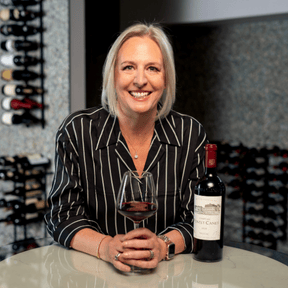
Often, when visiting a restaurant or wine shop, we select a wine, enjoy it, and move on. However, each bottle has a rich history of wine waiting to be discovered. With the internet at our fingertips, we can easily learn more wine stories about the wine we're drinking. Start by examining the label’s details: the region, the family who made it, and suggested food pairings. The wine labels offer clues to the wine’s origin and story. We can also read up on wine tech sheets or wine spec sheets. Read more to explore the rich heritage, craftsmanship, and history behind your favorite wines with Anne Kjellgren, your Wine PhD.
Welcome to Mindful January, a month dedicated to embracing mindfulness and intentionality in our wine experience. I’m Anne Kjellgren, and I’m thrilled to have you join me on this journey to foster a deeper connection to the art, science, history, and culture of wine.
The Back of the Bottle: More Than Just Legal Text
Have you ever noticed that while we often choose wine based on its appealing front label, the real story might be hidden on the "back" of the bottle? Traditionally, the back label contains the legally required information—a small white label in 10-point font listing details like the wine’s region of origin, alcohol percentage (usually around 14%), and a note on sulfites. Yet, the side adorned with the artwork and the producer’s name—which we often call the "front"—is actually just as crucial. It’s this artwork that forms our first impression and creates that initial connection.
With today’s technology, you can take a moment to look up your wine online. Just type in the producer’s name, a variety like “Louis Jadot Pinot Noir,” and even add “tech sheet PDF” to find detailed production notes. This trivia isn’t just fun—it opens the door to understanding the wine’s journey from vine to bottle.
A Journey Through Time: Wine’s Rich Heritage in France
To truly appreciate a wine’s story, we must look back to its roots. Wine history is inseparable from the heritage of France—the country that began documenting vinification practices around 500 AD. After the fall of the Roman Empire, when supply chain challenges meant that red wine was scarce, the Romans discovered that adding wine to water helped purify it. This simple yet ingenious solution not only aided travel but also laid the foundation for wine’s role in daily life.
As Rome crumbled, France entered the Dark Ages, creating a power vacuum in wine production. The church stepped in to fill this gap by using wine for sacraments and everyday sustenance. They established monasteries approximately every 10 miles (the distance between villages) to ensure communities had access to this vital resource. Monks, who were among the few literate individuals of the time, began documenting and experimenting with different grape varieties, vegetables, and herbs. Their meticulous records and passion for innovation are the bedrock upon which centuries of winemaking excellence have been built.
Appreciating Craftsmanship and Tradition
Whether you’re enjoying an Old World wine with deep-rooted traditions or a New World wine full of fresh innovation, there’s a story behind every bottle. Consider the legacy of vineyards that have been family-run for generations—sometimes spanning 16 generations on the same plot of land. Each bottle encapsulates the labor, experimentation, and passion of countless individuals who came before.
Take a moment next time you enjoy a glass. Reflect on the winemaker, the vineyard, and even the weather of that particular season—yes, wines often do better when they’re a bit stressed! Even whimsical tales add to the magic; for example, I recently consulted for a wine club where a vineyard, affectionately known as “Game Trail,” was named after the owner’s adventurous hunting trips in the Californian mountains. These stories enrich our experience and deepen our connection to the wine.
This Week: Discovering Right Bank Bordeaux Stories
Pomerol vineyard and village
As we explore Right Bank Bordeaux this week—wines from Pomerol and Saint-Émilion—take a moment to research the stories behind these bottles. Many Right Bank estates are small, family-owned properties that have been passed down through generations, sometimes for centuries.
Château Pétrus - legendary Right Bank Bordeaux winery
For example, Château Pétrus in Pomerol is only about 28 acres (tiny by Bordeaux standards!) and produces one of the world's most sought-after wines. The Moueix family has stewarded this vineyard for decades, meticulously hand-harvesting Merlot grapes from iron-rich clay soils that create wines of extraordinary concentration and elegance. Every decision—from vineyard management to harvest timing to barrel selection—reflects generations of accumulated wisdom.
When you enjoy a Right Bank wine this week—whether it's a $30 Lalande-de-Pomerol or a splurge-worthy Saint-Émilion Grand Cru—look up the château online. Read about:
The family who makes it
The terroir and specific vineyard location
The winemaking philosophy (traditional vs. modern)
The history of the estate
This practice transforms your glass of wine from a beverage into a connection with place, people, and tradition. You're not just drinking—you're participating in a story that spans generations.
Deepen Your Wine Knowledge with Structured Education
If you're loving this journey into wine's stories, people, and places, you'll love Wine PhD: Essentials—my comprehensive wine fundamentals course launching this week (doors open Monday, January 19!).
In Wine PhD, we dive deep into:
Understanding terroir and how place shapes wine
Reading wine labels like a professional
Climate and regional differences (Old World vs. New World philosophies)
The history and culture behind major wine regions
How to research and appreciate wine beyond just tasting
Wine PhD isn't just about facts—it's about building a complete framework for understanding, appreciating, and confidently engaging with wine anywhere in the world.
Doors open Monday, January 19 at 10:00 AM. Cart closes Friday, January 23 at 11:59 PM.
Limited enrollment
Join the Conversation: Share Your Mindful Wine Moments
This series is all about embracing mindfulness and intentionality in our wine experiences. I invite you to join the conversation—share your mindful wine moments and takeaways in our free community, "Expand Your Palate: One Sip at a Time", or on social media using #MindfulWithWine.
This week, as you explore Right Bank Bordeaux, share:
The story behind a wine you discovered
An interesting fact from a tech sheet or château website
A connection you made between the wine and its terroir
Your favorite wine label or bottle design
How learning the story changed your tasting experience
Every shared moment helps us all appreciate the artistry, history, and human connection behind each bottle. Wine is never just wine—it's culture, craft, and community.
Last week, we explored the Left Bank—Cabernet Sauvignon country, home to structured, age-worthy wines built for decades in the cellar. This week, we're crossing the Gironde River to discover the Right Bank, where everything changes.\
The Right Bank is Merlot's kingdom—softer, more approachable, lush wines that prove you don't need $500 bottles or decades of patience to enjoy great Bordeaux. If the Left Bank is about power and structure, the Right Bank is about elegance and pleasure.
Here's what makes the Right Bank special: It's where you learn that Bordeaux doesn't have to be intimidating or expensive. These are wines you can open tonight and enjoy, wines that pair beautifully with food, and wines that show the softer, more sensual side of France's crown-jewel region.
By the end of this post, you'll understand what makes the Right Bank different from the Left Bank, the famous appellations (Pomerol and Saint-Émilion), why Merlot thrives here, and how to choose Right Bank wines at every price point.
Let's explore Merlot's magic kingdom.
What is the Right Bank? (Geography Matters)
The "Right Bank" refers to the eastern side of the Gironde estuary and Dordogne River in Bordeaux—specifically the regions of Pomerol, Saint-Émilion, and their surrounding satellites (see the gold regions in the map above). If you're standing at the Atlantic Ocean looking inland toward Bordeaux, the Right Bank is on your right side.
🧠✨Fun Fact: In Bordeaux, Left and Right banks line up with the map, but in other regions, it can seem backwards. Why? The left and right are actually determined by which way the water flows. In the Rhone, the left bank is to the East and the right bank is to the West.
Why geography matters for wine:
While the Left Bank has deep gravel soils perfect for Cabernet Sauvignon, the Right Bank has completely different terroir: clay and limestone soils. This shift changes everything about the wines produced here.
What clay and limestone soils do:
Clay soils retain water: Unlike gravel (which drains quickly), clay holds moisture and stays cooler. This is perfect for Merlot, an earlier-ripening grape that doesn't need as much heat as Cabernet Sauvignon.
Limestone subsoil provides drainage: While clay retains some water on the surface, limestone underneath ensures proper drainage and adds mineral complexity to the wines.
Cooler temperatures moderate ripening: The maritime influence is still present (Bordeaux isn't far from the Atlantic), but clay moderates heat, creating ideal conditions for Merlot's plush, velvety character.
This terroir is Merlot heaven. That's why Merlot dominates Right Bank blends, typically making up 60-90% of the wine, with Cabernet Franc and sometimes small amounts of Cabernet Sauvignon filling supporting roles.
The result: Wines that are rounder, softer, more fruit-forward, and enjoyable much younger than their Left Bank counterparts. You don't need to wait 15 years—many Right Bank wines are delicious at 3-7 years old.
The Famous Right Bank Appellations
The Right Bank is home to two superstar appellations that produce some of the world's most sought-after (and yes, expensive) wines. But don't worry—there are accessible options too!
Pomerol: The Ultra-Luxury Appellation
Pomerol is tiny—only about 2,000 acres, making it one of Bordeaux's smallest major appellations. Despite its size, it produces some of the world's most legendary and expensive wines.
What makes Pomerol special:
No official classification system: Unlike other Bordeaux regions, Pomerol never established a formal ranking. Quality speaks for itself here.
Home to Pétrus: One of the world's most expensive wines (often $3,000-5,000+ per bottle!), made from 100% Merlot grown on iron-rich clay soils.
Iron-rich clay soils: These unique soils create wines with incredible depth, concentration, and aging potential.
Rich, luxurious, almost "hedonistic"—these are wines of pure pleasure
Flavors: Ripe plum, black cherry, chocolate, truffle, mocha
Texture: Silk and velvet in a glass
Price range: $40-$5,000+ (Yes, seriously. But there are more affordable options in surrounding appellations!)
Saint-Émilion: The Elegant Appellation
Saint-Émilion is much larger than Pomerol and offers more diversity in styles and prices. The picturesque medieval village of Saint-Émilion itself is a UNESCO World Heritage site—wine history runs deep here.
What makes Saint-Émilion special:
Has its own classification: The Saint-Émilion classification system is revised every 10 years (unlike the Left Bank's unchanging 1855 classification), keeping quality standards high.
Multiple sub-regions: Different soil types (clay, limestone, gravel, sand) create diverse wine styles within the appellation.
Merlot + Cabernet Franc blends: While Merlot still dominates (typically 60-80%), Cabernet Franc plays a bigger role here than in Pomerol, adding beautiful aromatics and structure.
Saint-Émilion character:
Elegant, aromatic, structured wines
More refined than Pomerol's opulence, with gorgeous floral and herbal notes from Cabernet Franc
Flavors: Red and black fruit, violets, tobacco, cedar, earthiness
Texture: Silky with more structure than Pomerol
Famous châteaux: Cheval Blanc, Ausone, Figeac, Pavie (these are legendary!)
Price range: $25-$2,000+ (Much more accessible entry points than Pomerol!)
Other Right Bank Regions Worth Knowing:
Lalande-de-Pomerol: Pomerol's affordable neighbor. Great quality-to-price ratio. Similar style, fraction of the cost. ($18-40)
Flavor profile: Plum, cherry, chocolate, mocha—lush and fruity
Food pairing: More versatile—duck, pork, mushrooms, softer meats, cheese
Aging consideration: Enjoyable at 3-7 years, but great wines still age beautifully (20-40+ years)
Famous appellations: Pomerol, Saint-Émilion
Neither is better—they're different expressions of Bordeaux shaped by terroir.
This is the beauty of Bordeaux: two banks of the same river system, completely different wines. Same region, same climate, different soils = dramatically different results.
Why understanding this matters:
When you taste a Merlot-based wine from anywhere in the world—Napa Valley, Washington State, Chile, Australia—you can reference the Right Bank benchmark. You'll recognize when a winemaker is aiming for Bordeaux-style elegance versus New World-style power and ripeness.
That's wine education. That's why studying French wine is foundational. And that's why it's actually fun—you're building a framework for understanding wine globally.
Why Merlot Thrives on the Right Bank
Merlot gets a bad reputation (thanks to the 2004 film "Sideways"), but on the Right Bank, it shows why it's one of the world's truly noble grapes.
Merlot's characteristics:
Flavors: Plum, black cherry, raspberry, chocolate, mocha, sometimes herbal notes (mint, eucalyptus)
Texture: Velvety, smooth, round—much softer tannins than Cabernet Sauvignon
Body: Medium to full, depending on climate and winemaking
Acidity: Medium to medium-high (refreshing without being sharp)
Aging potential: Great examples age 20-40+ years, developing complex tertiary flavors
Why Right Bank is Merlot's ideal home:
Clay soils = Merlot heaven Merlot loves clay. Clay retains water, stays cooler than gravel, and produces concentrated fruit with good acidity. Cabernet Sauvignon prefers warmer, well-drained gravel; Merlot thrives in cooler, moisture-retentive clay.
Earlier ripening grape Merlot ripens 1-2 weeks earlier than Cabernet Sauvignon. In Bordeaux's maritime climate (where autumn rain can be unpredictable), this earlier ripening is crucial. Merlot gets harvested before the weather turns.
Perfect blending partner: Cabernet Franc Right Bank winemakers blend Merlot (60-90%) with Cabernet Franc (10-40%), creating magic. Merlot provides the body, fruit, and approachability. Cabernet Franc adds aromatics (violets, herbs), structure, and complexity. The result is balanced, elegant, and delicious.
10-40% Cabernet Franc (adds aromatics, structure, aging potential)
0-10% Cabernet Sauvignon (optional, for additional structure)
This creates wines that are approachable young but still age beautifully—the best of both worlds. You can drink them at 5 years and enjoy them, or cellar them for 20 years and experience their evolution.
How to Choose Right Bank Bordeaux (Price Tiers & Recommendations)
You absolutely do not need $3,000 Pétrus to experience Right Bank magic. Here's how to explore at every budget:
Top Saint-Émilion estates: Cheval Blanc, Ausone, Figeac, Pavie
Legendary Pomerol: Pétrus, Le Pin, Lafleur, Trotanoy
Rare vintages from classified estates
What you'll get:
Wines that define what's possible with Merlot
Investment-grade bottles (if stored properly)
Stories to tell forever
Understanding why people collect wine
Food pairing: Special occasion meals, truffle risotto, prime beef, wild game
Pro Tips for Buying Right Bank Bordeaux:
✅ Vintage matters: 2015, 2016, 2018, 2019, 2020 are excellent recent vintages. 2017 and 2021 are also very good and often better value.
✅ Age consideration: Unlike Left Bank wines, many Right Bank wines are delicious at 3-7 years. Don't feel pressured to age everything for decades.
✅ Value hunting: Lalande-de-Pomerol offers incredible quality-to-price ratio. It's Pomerol's neighbor with similar soils and style, at a fraction of the cost.
✅ Decanting: Even approachable Right Bank wines benefit from 30-60 minutes of decanting to open up aromatics.
What to Pair with Right Bank Bordeaux
Right Bank wines are more food-versatile than Left Bank thanks to softer tannins and rounder texture. They play well with a wider range of dishes.
Perfect Pairings:
🦆 Duck (confit, magret, roasted): This is the classic French pairing. Duck's rich, gamey character matches the wine's plush fruit perfectly. The fat in duck softens any remaining tannins, while the wine's structure cuts through the richness.
🍄 Mushroom dishes: Earthy mushrooms (porcini, portobello, truffle) echo the earthy, forest-floor notes that develop in aged Right Bank wines. Try mushroom risotto, grilled portobellos, or wild mushroom pasta.
🐖 Pork (roasted, tenderloin, chops): Medium-bodied pork matches Right Bank wines beautifully. The meat's mild sweetness complements Merlot's fruit, and the texture pairing is spot-on.
🧀 Soft cheeses (Brie, Camembert, triple cream, aged Gouda): Creamy cheeses love Merlot's soft tannins. The wine won't overpower delicate cheese, and the fat in cheese makes the wine taste even more luxurious. (We're diving deep into cheese pairing Thursday!)
🍗 Chicken thighs or duck legs (braised, roasted): Richer poultry works wonderfully with Right Bank wines. The meat has enough character to match the wine without being overwhelmed.
🍝 Pasta with rich sauces: Bolognese, short rib ragu, mushroom cream sauce, or lasagna all pair beautifully with Right Bank Merlot.
🍕 Pizza with mushrooms, sausage, or caramelized onions: Yes, seriously! Right Bank wines are approachable enough for casual meals.
Cooking methods that work:
Roasted or grilled: Caramelization from high heat echoes the toasty oak notes in the wine
Braised: Rich, concentrated flavors from slow cooking match the wine's depth
With herbs: Thyme, rosemary, sage complement the Cabernet Franc's herbal notes in the blend
What to avoid:
❌ Very spicy dishes (soft tannins can't handle heat well)
❌ Delicate fish (wine is still too bold)
❌ Super lean proteins without sauce (wine needs some fat/richness to balance)
Pro tip: Right Bank wines are excellent with cheese plates—much more versatile than tannic Left Bank wines. We're exploring this in depth on Thursday!
Vineyards of Saint Emilion, Bordeaux Vineyards in France on a sunny day
Conclusion: Why the Right Bank Matters
Right Bank Bordeaux proves that great wine doesn't have to be intimidating, expensive, or require decades of patience. These are wines of pleasure, elegance, and approachability—wines you can open tonight and genuinely enjoy.
When you understand Right Bank Bordeaux, you understand:
Why Merlot is a noble grape worthy of respect and study
How terroir (clay vs. gravel) fundamentally shapes wine character
That Bordeaux has many faces—not just powerful, austere Left Bank Cabernet
The art of blending for elegance, balance, and approachability rather than sheer power
Here's what's truly exciting: Once you've explored both Left Bank (Cabernet country) and Right Bank (Merlot's kingdom), you understand the full spectrum of Bordeaux. You can taste any Bordeaux-style blend from anywhere in the world—California, Washington, Chile, Australia, South Africa—and recognize the style, the intention, the terroir influence.
You'll know if a winemaker is going for Left Bank power or Right Bank elegance. You'll understand why certain grapes were chosen. You'll taste with context and confidence.
That's wine education. That's why French wine is foundational. That's why it's worth the journey.
This Week's Challenge:
Pick up a Right Bank wine or Merlot-based blend (any price point!). Use the 5 S's from Week 1 to taste it mindfully:
SEE the color (typically deeper than Left Bank)
SNIFF for plum, cherry, chocolate
SWIRL and smell again
SIP and notice the soft, velvety texture
SAVOR the finish—how long does it last?
Share your experience in our free community, "Expand Your Palate: One Sip at a Time" [LINK]!
A master’s student in winemaking recently asked me what people struggle with most when learning about wine. My answer surprised even me—not because I didn’t know, but because after saying it out loud, I realized how deep the problem runs.
The real struggle isn’t tannins or terroir or whether to swirl clockwise. The real struggle is this: Americans have been taught to approach wine the way we approach athletic shoes or schools for our kids. We want to know which one is BEST. We want the shortcut to the ONE.
And I’m done being polite about it.
The Question Everyone Asks
“What’s your favorite wine?”
I hear it constantly. It’s always the first question. And what people are really asking is: Tell me which wine to buy so I know I’m doing it right.
They want validation. They want a celebrity to follow. They want a label they can trust because they’ve been conditioned not to trust their own palates.
People tell me about wines they’ve had on their travels, at wine dinners, or discovered along the way. They’re not sharing—they’re seeking confirmation. Did I get it right? Was that a good wine?
Here’s what I want to tell them: There is no ONE wine. And learning to be okay with that is the entire point.
The Machine of Wine Education
The current I swim against every day is massive. It’s the machine of wine sales in America, where most “education” is actually selling in disguise.
Wine reps are the ones teaching in most “educational” forums, and they’re not educators—they’re salespeople. That’s their job. I don’t blame them. But let’s stop pretending it’s education.
Restaurant owners won’t open bottles for staff to taste, so you have 20-somethings who aren’t into wine serving patrons, and their usual answer to wine suggestions is, “My friend Josh at the bar makes a great cocktail.”
I once took a group to France—a river cruise through five wine regions. The ship brought in a winemaker from California who showed up drunk at every session and spent his time talking about how he came up with cool names for his wines.
Classic example. You have people investing money and time to learn about wine, and they end up as cult followers of a label. The opportunity for genuine wine culture was completely lost.
So I really feel for consumers. They feel bewildered, intimidated, and desperately want to be part of something. But instead of being invited into a culture, they’re being sold a product.
What Wine Education Should Be
When I spend just 90 minutes with curious people, I can change their entire perspective. I do it through story. Through showing them—using their own taste buds—foundational wines alongside a few carefully chosen bites.
Their minds are blown when they realize they can experience wine differently than they thought possible. They discover it’s not about the ONE wine. It’s about the culture of wine.
North Americans don’t really understand place and how that plays into wine. They’ve been taught to value brand over origin, label over land, marketing over meaning.
But when you teach someone that Chablis tastes the way it does because of ancient oyster shells in the soil, or that Barolo is called “the wine of kings” because of centuries of history—suddenly wine becomes a doorway instead of a test.
That’s what really matters. Not the score. Not the label. The story, the place, the why.
The Real Obstacle
The hardest part of what I do isn’t teaching about tannins or acidity. It’s this:
Convincing people they should want to learn. That not knowing is the point. That their own taste matters.
But here’s where I need to be clear: this doesn’t mean “drink whatever you want.” That’s another myth the industry loves to sell because it absolves them of actually teaching anything.
It does matter which wine you serve. A delicate white Burgundy will be obliterated by a grilled ribeye. Left Bank Bordeaux will overpower your Dover sole. Champagne with oysters isn’t just tradition—it’s chemistry.
Learning wine is like learning music. You need to learn the notes before you can improvise. You need to understand structure, harmony, and foundation. But once you understand why certain wines pair with certain foods, why some regions produce wines with more acidity, why temperature matters—then you can start to follow your own instincts.
Then you can sing your own song.
I’m trying to demonstrate that asking “which wine is best?” is the wrong question entirely. The right questions are: What do I enjoy, and why? What really matters when I’m choosing wine?
But that requires people to trust themselves enough to learn. And we’ve systematically taught them not to.
What I’m Asking For
If you’re someone who works in wine—whether you’re a sommelier, a retailer, a rep, or an educator—I’m asking you to think about what you’re really teaching.
Are you inviting people into a culture? Or are you just moving product?
Are you teaching foundation—the why behind the wine? Or are you just handing them a list of “good” labels?
Are you showing them what really matters?
If you’re someone who loves wine but feels intimidated by it—I’m telling you this: Your palate is valid. Your preferences matter. But they matter more when you understand the instrument you’re playing.
Stop looking for the ONE. Start learning the foundation. Then explore the many.
Wine is not a test you pass or fail. It’s a conversation—between the land and the grape, the winemaker and the drinker, history and this moment right now.
And you’re allowed to be part of that conversation. You just need to learn the language first.
The journey is the point. Learning the foundation is the point. Then trusting your own experience is the point.
That’s what really matters. That’s what I’m trying to teach. And that’s what’s worth fighting for.
Welcome to Discovering the Art of Wine Pairing on Food Wine and Flavor, where we dive into the transformative world of wine and food pairing. In this post, you'll uncover how the art of wine pairing evolves from my personal journey—from hosting elegant dinner parties to mastering the practice of mindful pairing—to create a dining experience that’s both sophisticated and soul-nourishing. Discover practical tips, historical insights, and free resources designed to help you seamlessly integrate these techniques into your meals. Whether you're a seasoned connoisseur or just beginning to explore the flavors of life, this guide will inspire you to savor every bite and sip with intentionality. Join us as we transform everyday dining into a mindful ritual that celebrates tradition, culture, and the joy of pairing the perfect wine with your favorite dishes.
The journey of discovering how to elevate a simple dinner into an unforgettable experience is the reason I fell in love with wine in the first place.
Discovering the Art of Wine Pairing
It all began when my life was transitioning; I was hosting more formal dinner parties at home. My house had always been a gathering place for friends and family, but I was ready to move from casual backyard parties to more sophisticated dining experiences. Alongside my passion for entertaining, I spent years honing my skills in making artisanal cheeses, creating a perfect storm of indulgence with wine and food.
As my children were growing up and gaining independence, my husband and I found ourselves with more disposable income. We no longer needed to buy inexpensive wines to have something on the table. Instead, we wanted to learn the art of wine pairing.
Despite our backgrounds as corporate executives who entertained frequently, we discovered a gap in our knowledge about wine. We reached out to professionals in the industry—servers, sommeliers, and beverage managers—but were disappointed to find limited guidance. Even the books I turned to were not nearly as enlightening as I hoped. They were dry and factual rather than immersive, offering practical knowledge.
Thus began my journey to discover how to pair wine and food mindfully and transform a meal into an experience.
Historical Context: The Roman Influence on Wine
Before diving into practical tips, let’s touch on the historical context that makes wine such a potent culinary partner. Wine, particularly red wine, dates back to ancient times when Romans utilized it as an antimicrobial to make their water safe to drink. This fascinating tidbit not only highlights wine’s practical origins but emphasizes its integral role in everyday sustenance as much as enjoyment.
This historical foundation reminds us that wine and food have been partners for millennia—not as luxury, but as daily sustenance. Today, we can elevate that partnership from necessity to artistry through mindful pairing.
Mindful Pairing for Modern Times
With this grounding in history, let’s bring it back to today: the convergence of food and wine provides an opportunity for mindfulness. This ritualistic practice helps us slow down and savor each moment. We often overlook the importance of enjoying meals, rushing through them as if they’re mere obligations. Through mindful wine pairings, however, we can rediscover the simple joy of a well-composed meal.
It’s crucial to remember that wine was never intended to be a standalone beverage; it’s inherently a complement to food. Just as in ancient times, it can enhance the flavors and textures in our meals today.
Get Started with Simple Pairing Tips
To make your pairing journey easier, I’ve created a free pocket guide available here. This guide breaks down the basics, including eight noble grapes (plus sparkling wines and rosés) and their ideal food pairings. For example, a buttery Chardonnay pairs beautifully with seafood, creamy pastas, and certain cheeses, offering a rich, complementary taste experience.
Whether you're pairing Pinot Grigio with roasted vegetables or Cabernet Sauvignon with braised meat, this guide will steer you toward a more thoughtful dining experience.
Try This Tonight: Choose one wine from your rack. Pour a glass. Take a bite of food (cheese, bread, whatever's in your kitchen). Notice how the wine tastes. Now taste the wine alone again. Different, right? That's the magic of pairing—both become better together. This is mindfulness in action.
Experiencing Wine and Food Together
The real magic lies in experiencing these pairings. Many of my classes reveal the profound impact food can have on the perception of wine. Wines that may have initially seemed lackluster come to life alongside well-chosen foods. Pairing wine is an exploration of culinary tradition and culture, elevating your meal and offering new perspectives on flavors.
Red, white, rose and sparkling wines all pair nicely with Swiss Cheese
Want to Go Deeper? Mindful pairing is one of the core practices we explore in Wine PhD: Essentials—my comprehensive wine fundamentals course launching January 19th. You'll learn not just what pairs with what, but WHY pairings work, how to create your own pairings confidently, and how to navigate any wine list or restaurant with ease. [Reply to any email with "ESSENTIALS" for early access]
Join the Mindful Pairing Movement
As you embrace these mindful pairings, I encourage you to share your experiences in our free community, Expand Your Palate: One Sip at a Time. Use the hashtag #MindfulWithWine on social media to connect with fellow enthusiasts exploring wine as a mindful practice.
Our goal is to start the new year with intentionality and appreciation for the artistry of wine. Understanding that wine isn’t just about drinking—it’s about culture, tradition, and savoring life—can be a mindful practice and a form of self-care. Let "Savour the Good Stuff" be your guide.
French wines are named for the region they come from, rather than their grape varietals. When we talk about left bank Bordeaux wines, that is not a special type of grape, but rather one or more of the grape varietals approved for that area. This is one of several differences between Old World vs New World approaches to wine. We will also discuss left bank vs. right bank Bordeaux wines, how you can identify each bank, and their significance.
Bordeaux, one of the most iconic wine regions in the world, is located in southwestern France, where two rivers, the Garonne and the Dordogne, meet to form the Gironde estuary. The region is known for producing some of the world’s most highly prized and collectible wines.
The Left Bank of Bordeaux is a wine region located on the western side of the Gironde estuary, known for producing full-bodied red wines made primarily from Cabernet Sauvignon and Merlot varietals. The region is home to several famous chateaus, many of which were included in the Classification of 1855, which classified the top chateaux of Bordeaux based on their reputation and quality of wine.
Varietals of the Left Bank Bank Bordeaux
Cabernet Sauvignon is the most commonly planted grape varietal for Left Bank Bordeaux wines. It is a thick-skinned grape that produces wines that are full-bodied with high tannins and a bold, structured profile. Cabernet Sauvignon is celebrated for its flavors of black currant, blackberry, and plum, complemented by aromas of cedar, graphite, and tobacco.
Merlot is the second most significant grape varietal on the Left Bank of Bordeaux. It is often used to soften the intensity of Cabernet Sauvignon in blends, adding plushness and balance. Merlot contributes flavors of ripe red berries, plum, and black cherry, along with aromas of chocolate, vanilla, and spice.
Petit Verdot is another notable varietal grown on the Left Bank of Bordeaux, though it is used more sparingly in blends. This late-ripening grape adds depth and intensity with its dark color, firm tannins, and flavors of blackberry, black pepper, and floral notes like violet.
Bordeaux Wine Regions - Left Bank
Medoc
Medoc is located on the Left Bank of the Gironde estuary, and is one of the most prestigious wine-producing areas in the world. The region is home to some of the most famous chateaux (wine producers) in Bordeaux, including Chateau Lafite Rothschild, Chateau Latour, Chateau Margaux, and Chateau Mouton Rothschild. The Medoc is Bordeaux wine left bank and is known for producing full-bodied, tannic red wines that are built to age, with flavors of blackcurrant, leather, and tobacco.
Haut Medoc
The Haut Medoc is located south of the Medoc, and is known for producing wines that are slightly less tannic and more approachable in their youth than those of the Medoc. The region is home to several famous chateaus, including Chateau La Lagune and Chateau Sociando-Mallet. Note: Haut simply refers to the higher lands just south of the Medoc.
Graves
The Graves region is located south of Bordeaux city, and is known for producing both red and white wines. The red wines of Graves are made primarily from Cabernet Sauvignon and Merlot, and are known for their elegance and finesse. The white wines of Graves are made primarily from Semillon and Sauvignon Blanc, and are known for their rich, complex flavors.
Bordeaux Classification of 1855
One of the unique aspects of the Bordeaux wine industry is the system of classification that was first introduced in 1855. This system classified the top chateaus of the region into five different tiers, based on their reputation and quality of wine.
* * The most notable modification occurred in 1973, when Château Mouton Rothschild was elevated from Deuxième Cru (Second Growth) to Premier Cru (First Growth) in the 1855 Bordeaux Classification. This was a historic and unprecedented event, as the classification had remained largely unchanged since its inception.This elevation was the result of decades of lobbying by Baron Philippe de Rothschild
In addition to the classification system, Bordeaux is also known for its system of negociants en primeur. These are wine merchants who purchase wine directly from the chateaus while the wine is still in the barrel, before it has been bottled or released to the market. The wines are then sold to consumers as futures, with the understanding that the wine will be delivered to them once it has been bottled and released.Wine Regions
The Left Bank of Bordeaux is home to several important wine regions, each with its own unique terroir and style of wine. Which is better? Left Bank vs Right Bank Bordeaux is a common question asked by wine loves. The answer? It depends on the situation, the meal at hand, and the individual’s preferences.
Medoc: (1) Located on the Left Bank of the Gironde estuary, the Medoc is one of the most prestigious wine-producing areas in the world. The region is known for producing full-bodied, tannic red wines that are built to age, with flavors of blackcurrant, leather, and tobacco. The Medoc is home to some of the most famous chateaus in Bordeaux, including Chateau Lafite Rothschild, Chateau Latour, Chateau Margaux, and Chateau Mouton Rothschild.
Pauillac: (1) Located in the northern part of the Medoc, the Pauillac region is known for producing full-bodied, tannic red wines that are built to age. The region is home to several famous chateaus, including Chateau Lafite Rothschild, Chateau Latour, and Chateau Mouton Rothschild.
Saint-Estephe: (1) Located in the northern part of the Medoc, the Saint-Estephe region is known for producing full-bodied, robust red wines that are characterized by their earthy, rustic flavors. The region is home to several famous chateaus, including Chateau Cos d’Estournel and Chateau Montrose.
Haut Medoc: (2) Located south of the Medoc, the Haut Medoc is known for producing wines that are slightly less tannic and more approachable in their youth than those of the Medoc. The region is home to several famous chateaus, including Chateau La Lagune and Chateau Sociando-Mallet.
Margaux: (2) Located in the southern part of the Medoc, the Margaux region is known for producing some of the most elegant and refined wines in Bordeaux. The region is home to several famous chateaus, including Chateau Margaux, Chateau Palmer, and Chateau Rauzan-Segla.
Graves: (3) Located south of Bordeaux city, the Graves region is known for producing both red and white wines. The red wines of Graves are made primarily from Cabernet Sauvignon and Merlot, and are known for their elegance and finesse. The white wines of Graves are made primarily from Semillon and Sauvignon Blanc, and are known for their rich, complex flavors.
Pessac-Leognan: (3) Located within the Graves region, the Pessac-Leognan appellation is known for producing some of the most highly regarded red and white wines in Bordeaux. The red wines are typically made from Cabernet Sauvignon and Merlot, while the white wines are made from Semillon and Sauvignon Blanc. The region is home to several famous chateaus, including Chateau Haut-Brion and Chateau La Mission Haut-Brion.


 In Wine PhD, we dive deep into: