
There is a kind of wine that tastes like salt and has no salt in it. People reach for the word minerality, and the word gets in the way. Salinity is simpler. It is a sensation, and you can find it in your own mouth in under a minute.
The Practice
You need two glasses and a pinch of sea salt. Fill the first with water and stir in salt until you can barely tell it is there. Not seawater. Not broth. A trace. Take a small sip and hold it on the tongue for a few seconds. Notice what your mouth does. Does it begin to water? Does something along the sides of the tongue wake up?
That response is the sensation we are after: a quiet, savoury mouth-watering that arrives after the taste itself has gone.
Now pour a dry, crisp white from a place near the sea. Assyrtiko is this week’s example. A young Muscadet or a dry Fino sherry would do just as well. Taste it the same way. Small sip, hold it, wait. Ignore the fruit for now. You are not asking what it tastes like. You are asking what it does.

SENSORY PAUSE After you swallow, count to five. Notice whether your mouth is still watering and whether the finish feels clean, like something rinsed. If it does, you have found the salt that was never added. |
A Word About Words
Minerality is a word that has been asked to do too much. It gets used for stone, for chalk, for salt, for anything that is not fruit. Wine science has not settled what it means, and the argument does not need to be settled for you to taste something. Salinity is a narrower and kinder word. It points to one sensation you can test in your own mouth, which is the only kind of vocabulary worth keeping.
Acid and Salt Are Cousins
They are easy to confuse. Acid tightens. It pulls at the sides of the tongue and lifts at the front of the mouth. Salinity tends to arrive later and lower, a savoury finish that leaves the mouth feeling as if it has been near the sea. If the water test worked, you will recognize the second feeling when you meet it.
Nobody agrees on exactly why some wines read as salty. The sensation is real enough to notice, and that is all this practice asks.
What I Keep Noticing
People reach for a description before they reach for the sensation. They want the right word, so they skip the tasting. The order matters. The sensation comes first. The word is only there to give it a name afterward.
This is where people overcomplicate things. You do not need a vocabulary of minerals. You need one honest question, asked slowly: what is my mouth doing right now?
Why It Matters at the Table
Salt in the glass answers salt on the plate. It is one reason a dry, saline white feels made for the sea: oysters, crab, grilled fish, olives, a hard cheese. We saw it in the pairing where the wine and the sea find each other, and we tasted a different route to the same feeling in salinity carried from an old sea, the sherry of Jerez. Different mechanisms, same instinct on the palate.
When you can feel salinity, a whole category of pairings stops being a rule and becomes something you can taste for yourself. Thursday’s dish is built on it.
Bring It to a Meal
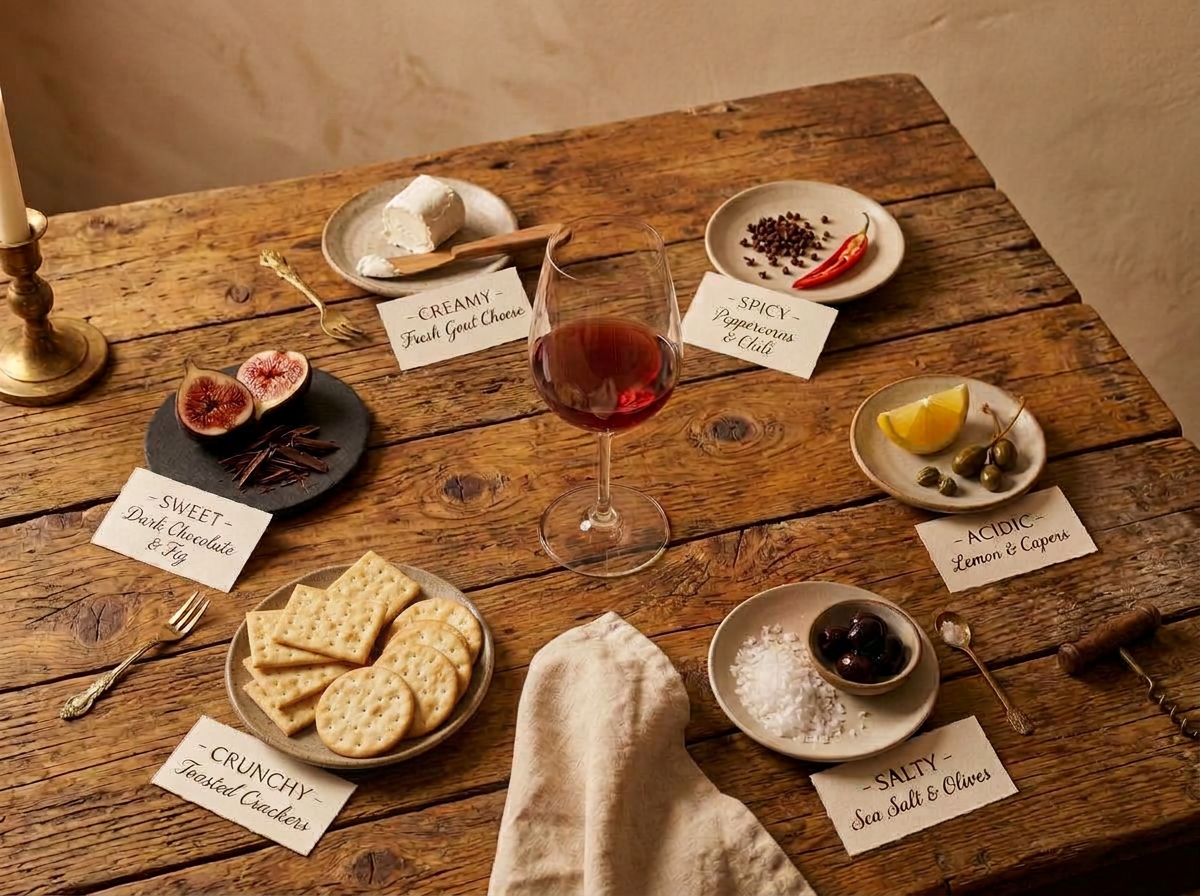
Try it this week with food. Take a small bite of something briny, an olive, a piece of feta, a cold shrimp, and then sip the wine. Notice whether the salt on the plate makes the wine feel rounder and less sharp. Salt has a way of lowering the volume of acid and bitterness on the tongue, which is one reason a lean white can taste kinder beside a salty plate than it does alone.
This Is Not a Test
There is no right answer here. Some days the salt is loud. Some days you will not find it. Both are fine. The practice is not identifying salinity correctly. It is building the habit of asking your mouth the question before the label answers it.
If You Cannot Find It
Some days the water test does nothing, and that is useful information too. The salted water may have been too strong, and the mouth went straight to salt instead of watering. The wine may have been too cold, which mutes almost everything. Or there may have been too much fruit for the salt to be heard. Try again with less salt, a slightly warmer glass, and a wine with less obvious fruit. The point is patience, not a result.
How to Repeat It
Run the same two glasses again with something you already know: a white you drink often, a glass of sparkling water, the brine from a jar of olives diluted to almost nothing. Each one teaches the mouth a little more about where the sensation lives. Practice, not performance. One small sip is enough.
Notice, too, how the practice changes the meal. Once you can feel salt in the glass, you begin to notice it on the plate, in a slice of cured meat or a spoonful of olives, and to sense where the two overlap. That overlap is where most good pairings begin.
READ NEXT IN THIS WEEK’S WINE PATH
|
Continue Exploring
Last Updated: Oct 5, 2026
Post Created: Oct 5, 2026

0 Comments