
Between Florence and Siena, the hills roll in a way that looks almost too composed to be real: cypress lines cutting straight up the ridges, stone farmhouses set exactly where the light will find them at four in the afternoon. This is Chianti Classico, the historic heart of Tuscany, and it has been growing Sangiovese on these slopes since long before Italy had a name for the wine on its own label.
Sangiovese is Tuscany's grape the way olive oil is its condiment: not a specialty, simply the given. It covers more of Italy than any other red variety, but nowhere does it speak as clearly as it does here, on the galestro and alberese soils, the crumbling clay and limestone that force the vine to work for everything it gets.
|
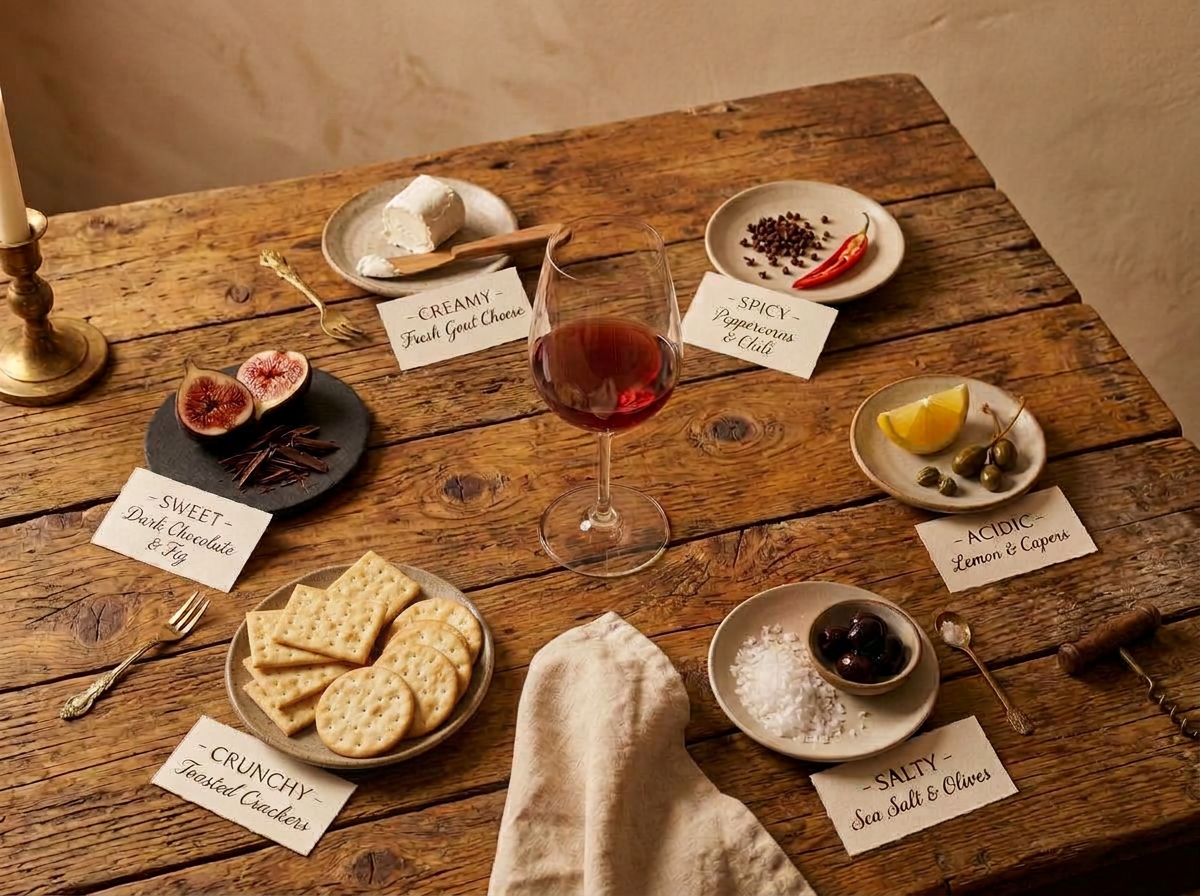
Pour a glass of Chianti Classico and look at it before you do anything else. The color runs lighter than most reds expect to be, a translucent ruby you can see light through at the edge of the glass. Then taste it, and notice where the sensation lands: not on the front of the tongue, but along the sides of your mouth and under your jaw, a bright, almost electric grip. That is acid doing the work most wines ask fruit to do. |
 SENSORY PAUSE
What Sangiovese gives up in weight, it makes up in precision. Sour cherry and red plum sit over dried herb, a savory tomato-leaf note, and a thread of leather that keeps the fruit from turning sweet. Firm, dusty tannin runs underneath all of it, present but never heavy. This is not a wine built to impress on its own. It is built to sit at a table, next to food, doing what Tuscan wine has always done.

Chianti Classico is one appellation among several Sangiovese-based wines the region produces, and it earns the word Classico, meaning it comes from the original, historic zone rather than the wider Chianti area that grew up around it later. Look for the black rooster, the Gallo Nero, on the neck of the bottle. It marks a wine grown inside that historic boundary, made under the region's strictest rules.
Alongside Chianti Classico sits a newer, bolder cousin: the Super Tuscan. In the 1970s, a handful of Tuscan producers began blending Sangiovese with Cabernet Sauvignon and Merlot, grapes with no place in traditional Chianti law, and aging the results in French oak instead of the old large Slavonian casks. The wines broke the rules on purpose, were labeled with Italy's lowest official designation as a result, and became some of the most sought-after bottles in the country anyway. If Chianti Classico is Tuscany speaking in its own voice, the Super Tuscan is Tuscany answering Bordeaux and Napa directly, in a language readers who have followed this year already understand.
READ NEXT IN THIS WEEK'S WINE PATH
→ Monday: the skill post on why Sangiovese and tomato sauce are built for each other.
→ Tuesday: Sangiovese as a grape, and where the Super Tuscan fits beside it.
→ Thursday: Pasta al Pomodoro, the pairing that proves the rule.
Continue Exploring
Last Updated: Aug 16, 2026
Post Created: Aug 16, 2026

0 Comments