

There is a stretch of country north of Verona, low hills between the city and Lake Garda, where a single family of red grapes does something most wine regions do not attempt. It makes three different wines, at three different intensities, from largely the same fruit.

The lightest is called Valpolicella. Simple, cherry-bright, meant for a weeknight table. The richest is Amarone, dried for months until the grapes shrivel toward raisin, the sugars concentrating into something dark, warm, and nearly sixteen percent alcohol. And in between sits the wine most useful to actually understand, because it explains the other two: Ripasso.
Ripasso means “re-passed.” After Amarone finishes fermenting, the winemaker does not throw away the skins it leaves behind. Those skins still hold flavor, tannin, and the concentrated character of the drying process. Young Valpolicella is passed back over them, a second fermentation begins, and the wine that emerges has picked up weight, dried-cherry depth, and a gentle warmth it did not have before. It is sometimes called “baby Amarone,” and the nickname earns its keep. All the character, less of the intensity, and a fraction of the price.
|
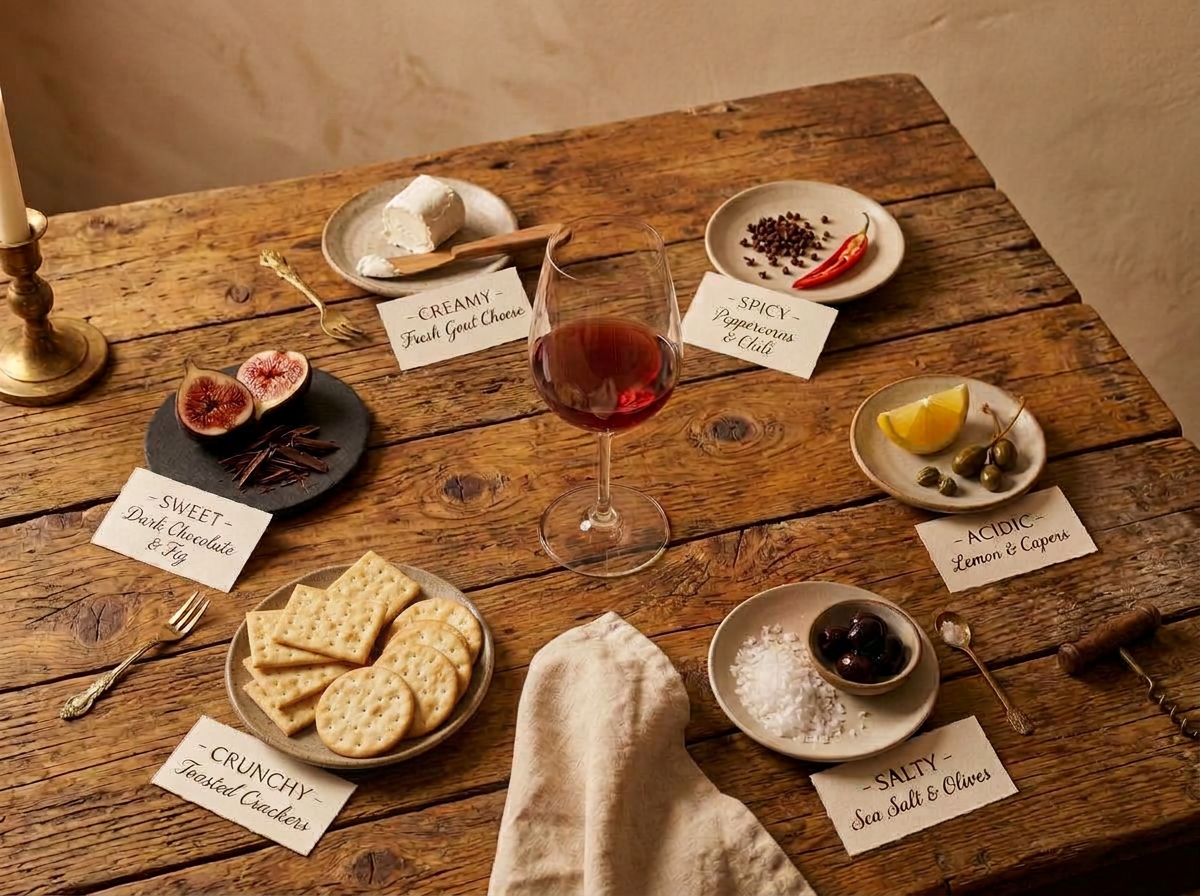
Pour a Ripasso and let it sit for a minute before tasting. The nose gives cherry and a note of raisin, almost sweet. The first sip corrects that impression: dry, structured, warmed at the edges rather than sweetened. That gap between what the glass promises and what it delivers is worth noticing on its own. |
 SENSORY PAUSE
The grape underneath all three wines is Corvina, usually blended with small amounts of Rondinella and sometimes Corvinone. None of these names show up prominently on the label, which is the first lesson of the Italian arc this week is opening: Italian wine is usually named for a place and a method, not a grape. Understanding Valpolicella means understanding a hillside and a process before it means memorizing a varietal.
Veneto itself is one of Italy’s most productive wine regions, stretching from the Alps down to the Adriatic, and Valpolicella is only one corner of it. But it is the corner that teaches the most in one glass: how drying grapes, rather than picking them earlier or later, becomes its own route to concentration. The same idea showed up in Alsace and again in Niagara last week, reached by two entirely different mechanisms. Here, the mechanism is time and air.
This week follows that thread through three stops: what the label is actually telling you, why the grape behaves this way when dried, and what happens when Ripasso meets a slow-braised plate built to match it.
|
READ NEXT IN THIS WEEK'S WINE PATH → How to Read an Italian Wine Label (Monday) |
Continue Exploring
If this resonated, you might also enjoy:
Northern Italy’s Refined Essence: Highlighting Wines with Unmatched Elegance and Precision
Sélection de Grains Nobles: The Rarest Wine in the Alsatian Cellar
The Grape That Hangs On When Every Other Has Been Picked
Cabernet Sauvignon: Learning to Taste the Structure
Last Updated: Aug 2, 2026
Post Created: Aug 2, 2026

0 Comments