

Sherry is easiest to understand in a line, dry to sweet, with each style a small step further from the last. Taste them in order and the logic of the whole family becomes obvious in a way no written description quite manages.
Fino and Manzanilla
The driest and lightest of the family. Pale, saline, almond-edged, aged entirely under flor. Manzanilla is made in the coastal town of Sanlúcar de Barrameda specifically, and often carries a touch more salinity from its proximity to the sea, though the two styles sit close enough to taste as siblings rather than strangers. Serve both well chilled, and drink them soon after opening; this is not a wine built to sit in a bottle for weeks.
Amontillado
A sherry that begins under flor and finishes without it. The early saline edge of Fino softens and deepens toward walnut and hazelnut as oxidation takes over partway through its aging. Nothing was added to make this happen, only time and a shift in exposure to air. Serve lightly chilled.
Oloroso
Fortified to a strength flor cannot survive, and aged oxidatively from the start. Darker, heavier, and dry despite its richness: walnut, dried fig, leather, no sweetness at all. This is the style most easily mistaken for a sweet wine by appearance alone, and the one most worth correcting that assumption on. Serve cool, not cold.
Pedro Ximénez
Made from sun-dried grapes rather than fresh-pressed ones, and unmistakably sweet: raisin, molasses, dark chocolate, nearly black in the glass. The fourth route to sweetness this curriculum has taught, after late harvest, freeze concentration, and appassimento drying. Serve cool, not cold, and consider it a dessert on its own before reaching for anything else.
Line up all five styles, even in small pours, and taste them in the order above. The distance between the first glass and the last is the entire lesson.
A Technique Callback
Sherry’s range comes entirely from cellar technique rather than grape or vineyard, which puts it in conversation with a lesson from earlier this year: Ripasso, where drying grapes from a prior harvest concentrates and reshapes a finished wine. Different climate, different method, same underlying principle: what a winemaker chooses to do after the grapes are picked can matter as much as where they were grown. Veneto: One Grape, Three Escalating Stories
Read Next
Monday's guide to bitterness walks deeper into what you're sensing across these five styles.
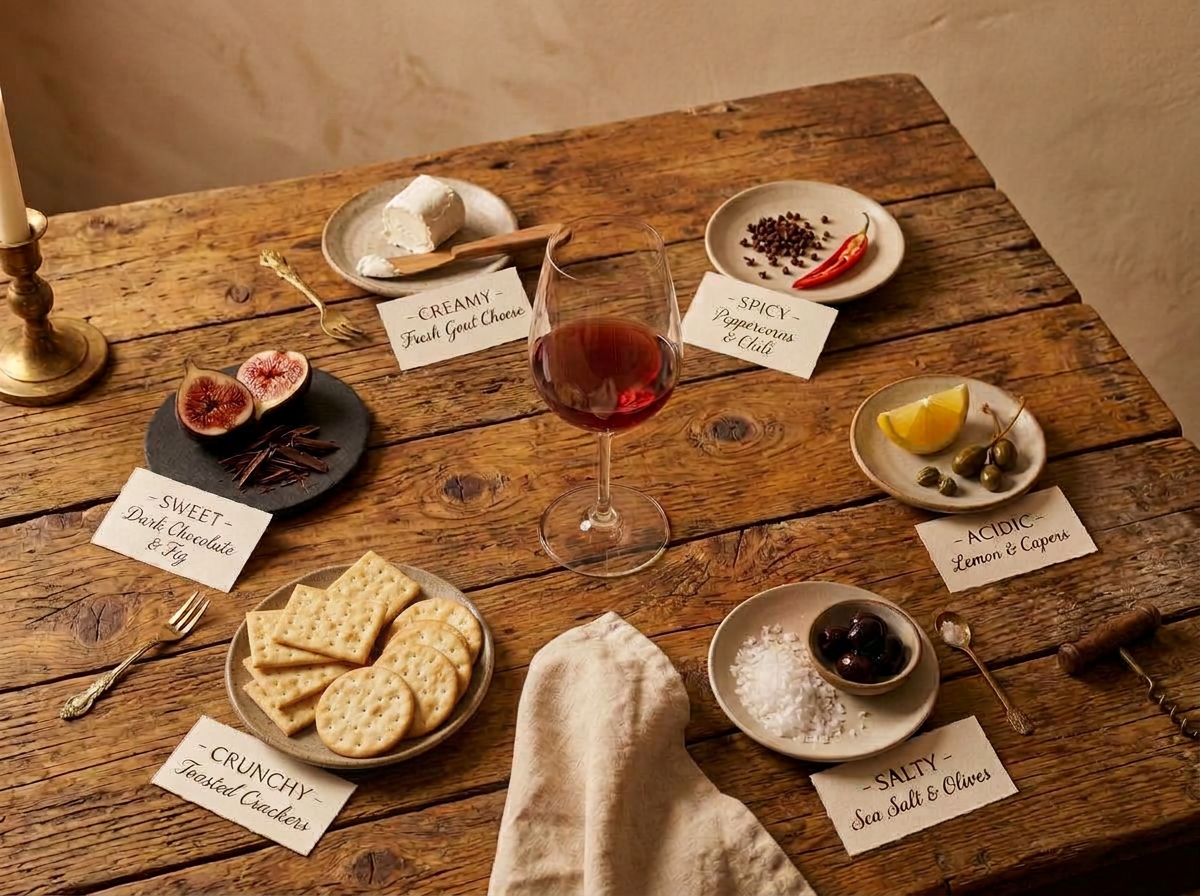
Thursday: a build-your-own tapas and cheese flight, matched to the full sherry range, style by style.
Continue Exploring
If this resonated, you might also enjoy:
Rioja: What Time Looks Like in a Glass - Last week explored American oak aging in Rioja. This week, flor and oxidation create a different kind of complexity in the same region.
Chianti Classico: The Hills That Taught Italy to Cook - Week 33 taught acid as the backbone of structure. Sherry teaches bitterness as a parallel tool—a different sensory language for the same principle.
Sipping Through Niagara: Discover New York’s Overlooked Wine Treasure - Week 30 showed freeze-concentration as one route to sweetness. Sherry and Pedro Ximénez take others: fortification and oxidation.
The Aromatic Whites of Alsace: A Framework for Everything We’ve Covered - Like Alsatian whites, Sherry's aromatics demand attention—but Sherry asks for bitterness-awareness rather than sweetness-tolerance.
Last Updated: Sep 1, 2026
Post Created: Sep 1, 2026

0 Comments